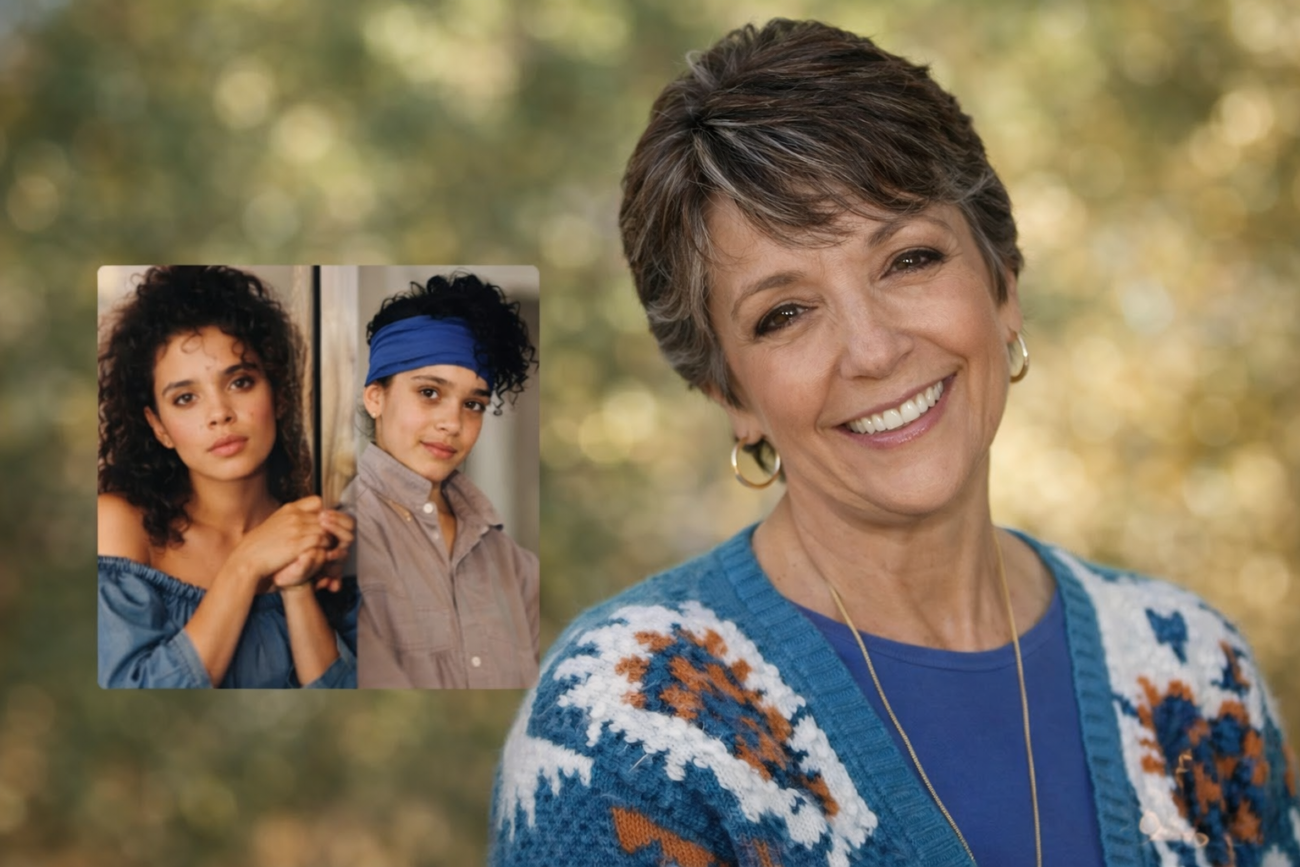
For readers searching her name, the interest often begins with curiosity about lineage. Who raised Lisa Bonet? What shaped the sensibility that later became part of Zoë Kravitz’s identity? The answers lead back to Arlene Litman, a Jewish American teacher who raised her daughter largely as a single mother in California. The details are not exhaustive, but they are revealing enough to understand her place in a broader story about family, identity, and inheritance.
Early Life and Family Background
Arlene Joyce Litman is widely reported to have been born on February 11, 1940, in Pittsburgh, Pennsylvania. Public documentation about her childhood is limited, and no widely cited interviews or first-person accounts describe her early years in detail. What is known comes primarily through genealogical records and the cultural context of her upbringing as part of an Ashkenazi Jewish family with roots in Eastern Europe.
Growing up in mid-20th century America, Litman would have come of age during a period marked by postwar change and shifting roles for women. Jewish families in cities like Pittsburgh often emphasized education, stability, and cultural continuity, values that would later surface in how Litman raised her daughter. While there is no confirmed public record of her parents’ occupations or her schooling, the trajectory of her life suggests a strong educational foundation.
Not many people know this, but even in the absence of detailed records, the choice of profession can speak volumes. Litman became a teacher, a role that typically requires formal education and training. That decision places her within a generation of women who pursued professional work while also carrying the expectations of family life, often without public recognition.
Moving to California and Adult Life
At some point in her early adulthood, Litman relocated to California, where she would spend the rest of her life. The move aligns with broader migration patterns of the time, as many Americans sought opportunities and a different pace of life on the West Coast. By the 1960s, California had become a center for artistic experimentation and cultural change, which may have influenced the environment Litman would later create for her daughter.
It was in this period that she met Allen Bonet, an African American opera singer. Their relationship led to the birth of their daughter, Lisa Michelle Bonet, on November 16, 1967, in San Francisco. The pairing itself reflected a social reality that was still contested in many parts of the United States. Interracial relationships, though legal after the 1967 Loving v. Virginia decision, often faced social resistance.
The relationship between Litman and Allen Bonet did not last. They separated when Lisa was very young, leaving Litman to raise her daughter largely on her own. That decision would shape the structure of their family life and the emotional environment in which Lisa Bonet grew up.
Raising Lisa Bonet as a Single Mother
Arlene Litman’s most significant and best-documented role was as the primary caregiver for Lisa Bonet. After separating from Allen Bonet, she settled in the Los Angeles area, raising her daughter in neighborhoods such as Reseda in the San Fernando Valley. This period forms the clearest window into Litman’s life, because it is reflected in Bonet’s own accounts of her upbringing.
Lisa Bonet has spoken about feeling like an outsider during her childhood, describing experiences of isolation tied to her mixed racial background. She often felt caught between communities, not fully accepted in any single one. While Bonet’s reflections focus on her own feelings, they also point to the challenges Litman faced as a parent navigating those complexities on behalf of her child.
The truth is, single parenting in that context required both resilience and sensitivity. Litman was responsible not only for providing stability but also for helping her daughter understand and manage a complicated social identity. There is no public record of how she approached these challenges in detail, but Bonet’s later confidence and distinct sense of self suggest a foundation built with care.
Career as a Teacher
Arlene Litman is consistently described in reliable summaries as a teacher, though specifics about her career remain limited. Some accounts suggest she worked as a music teacher, but there is no widely cited documentation confirming the institutions where she taught or the exact duration of her career. Even so, the designation of “teacher” is one of the most stable elements in her biography.
Teaching is a profession that often leaves a lasting impact without generating public attention. It involves daily engagement, patience, and the ability to guide others’ development over time. In Litman’s case, that influence can be traced most directly through her daughter.
Here’s where it gets interesting. Lisa Bonet’s career in acting began early, and she later became known for a presence that felt both natural and unconventional. While it would be an overstatement to attribute that entirely to Litman’s profession, the environment created by a parent who valued education and possibly the arts likely played a role.
Cultural Identity and Family Dynamics
Arlene Litman’s identity as a Jewish American woman shaped the cultural framework of her household. Her daughter Lisa Bonet grew up with that heritage as one part of her identity, alongside her African American background through her father. This dual heritage became a central theme in Bonet’s public narrative.
Bonet has described feeling disconnected at times from both sides of her identity, an experience that reflects broader social tensions of the era. For Litman, raising a child in that context meant balancing cultural continuity with adaptation. She was not raising a child who fit easily into one community, and that reality required a flexible approach to parenting.
What’s surprising is how little direct commentary from Litman herself survives. There are no widely known interviews or published writings in which she discusses her perspective. Instead, her influence must be understood through the outcomes—through Bonet’s sense of independence and later through the values that appear to carry into the next generation.
Relationship with Lisa Bonet’s Career
As Lisa Bonet began to pursue acting, Litman remained largely outside the spotlight. Bonet attended the Celluloid Actor’s Studio in North Hollywood and began working in television as a teenager. Her breakthrough came with The Cosby Show in the mid-1980s, where she played Denise Huxtable, a character that quickly became a cultural touchpoint.
During this period, there is little public documentation about Litman’s involvement in her daughter’s career decisions. That absence does not imply distance; it reflects a pattern of privacy. Many parents of young actors maintain a behind-the-scenes role, focusing on support rather than visibility.
Bonet’s career choices, including her departure from A Different World and her willingness to take unconventional roles, suggest a strong sense of autonomy. It is reasonable to see Litman’s parenting as part of the foundation for that independence, even if the specifics remain undocumented.
Becoming a Grandmother
Arlene Litman became a grandmother in 1988 with the birth of Zoë Kravitz, the daughter of Lisa Bonet and musician Lenny Kravitz. This added another layer to her family life, connecting her to a new generation that would later achieve its own form of public recognition.
Zoë Kravitz has occasionally referenced her grandmother in interviews and public appearances, offering glimpses into Litman’s personality. One of the most widely cited examples came in 2019, when Kravitz launched a collaboration with YSL Beauté. She named one of the lipstick shades “Arlene’s Nude,” explaining that it was inspired by her grandmother’s understated approach to beauty.
That detail may seem small, but it provides one of the few personal descriptions available. It suggests a woman who valued simplicity and authenticity, traits that align with the broader aesthetic associated with both Bonet and Kravitz.
Later Years and Death
Arlene Litman’s later years are not extensively documented in public sources. What is widely reported is that she died on March 3, 1998, in Los Angeles at the age of 58. Some sources attribute her death to breast cancer, but this detail is not consistently supported by strong primary documentation.
The lack of detailed reporting about her death reflects her overall public profile. She was not a public figure, and her passing did not generate widespread media coverage. As a result, the available information comes primarily from secondary sources and family references.
But here’s the thing. The absence of extensive documentation does not diminish the significance of her life. It highlights the difference between public visibility and personal impact, a distinction that is often overlooked in celebrity culture.
Public Image and Legacy
Arlene Litman’s public image is defined largely by her relationships rather than her own public actions. She is remembered as Lisa Bonet’s mother and Zoë Kravitz’s grandmother, roles that carry weight because of the achievements of those who followed her. Yet within that framework, her identity as a teacher and a single parent remains central.
Her legacy is most visible in the qualities associated with her family. Lisa Bonet is known for her introspective nature and resistance to conventional celebrity expectations. Zoë Kravitz, while operating in a different era, often projects a similar sense of individuality and restraint.
The connection between these traits and Litman’s influence cannot be measured precisely, but it is difficult to ignore. Families transmit values in ways that are rarely documented but often deeply felt. In this case, the throughline appears to be a commitment to authenticity and self-definition.
Where Arlene Litman Is Now
Arlene Litman passed away in 1998, and there is no ongoing public presence associated with her name beyond family references and biographical summaries. Her story continues to surface primarily through interest in Lisa Bonet and Zoë Kravitz.
In a sense, her current presence is indirect but persistent. Each time her daughter or granddaughter speaks about identity, style, or upbringing, traces of Litman’s influence become part of the conversation. That kind of legacy is not tied to public appearances or ongoing projects, but it remains visible in the lives she helped shape.
Frequently Asked Questions
Who was Arlene Litman?
Arlene Litman was an American teacher best known as the mother of actress Lisa Bonet and the grandmother of actress Zoë Kravitz. She lived a largely private life and is primarily known through her family connections.
What did Arlene Litman do for a living?
She worked as a teacher, with some sources suggesting she may have been involved in music education. Specific details about her career, including where she taught, are not widely documented.
Was Arlene Litman married?
She was in a relationship with opera singer Allen Bonet, with whom she had her daughter Lisa Bonet. The relationship ended early, and she raised her daughter as a single mother.
When did Arlene Litman die?
She is widely reported to have died on March 3, 1998, in Los Angeles at the age of 58. The exact cause of death is not consistently confirmed in primary sources.
What is Arlene Litman’s connection to Zoë Kravitz?
She was Zoë Kravitz’s grandmother. Kravitz has publicly honored her by naming a lipstick shade “Arlene’s Nude” in a YSL Beauté collection.
What is known about Arlene Litman’s net worth?
There is no publicly confirmed information about her net worth. As a private individual and teacher, her financial details were not part of public reporting.
Conclusion
Arlene Litman’s life does not fit the usual contours of a celebrity biography. There are no headline-making achievements, no widely quoted interviews, and no carefully curated public persona. What exists instead is a quieter record, one that requires attention to context and an understanding of influence that extends beyond visibility.
Her role as a mother and teacher placed her at the center of a family that would later become widely recognized. The values she carried and the environment she created helped shape individuals who would go on to define their own paths in the public eye.
The truth is, stories like Litman’s are often overlooked because they do not produce dramatic narratives. Yet they are essential to understanding how public figures come to be. Behind every visible success is a network of relationships, and in this case, Arlene Litman stands as a key part of that foundation.
Her legacy is not built on fame, but on continuity. It lives in the confidence of her daughter, in the creative expression of her granddaughter, and in the quiet acknowledgment that influence does not always require recognition to endure.
