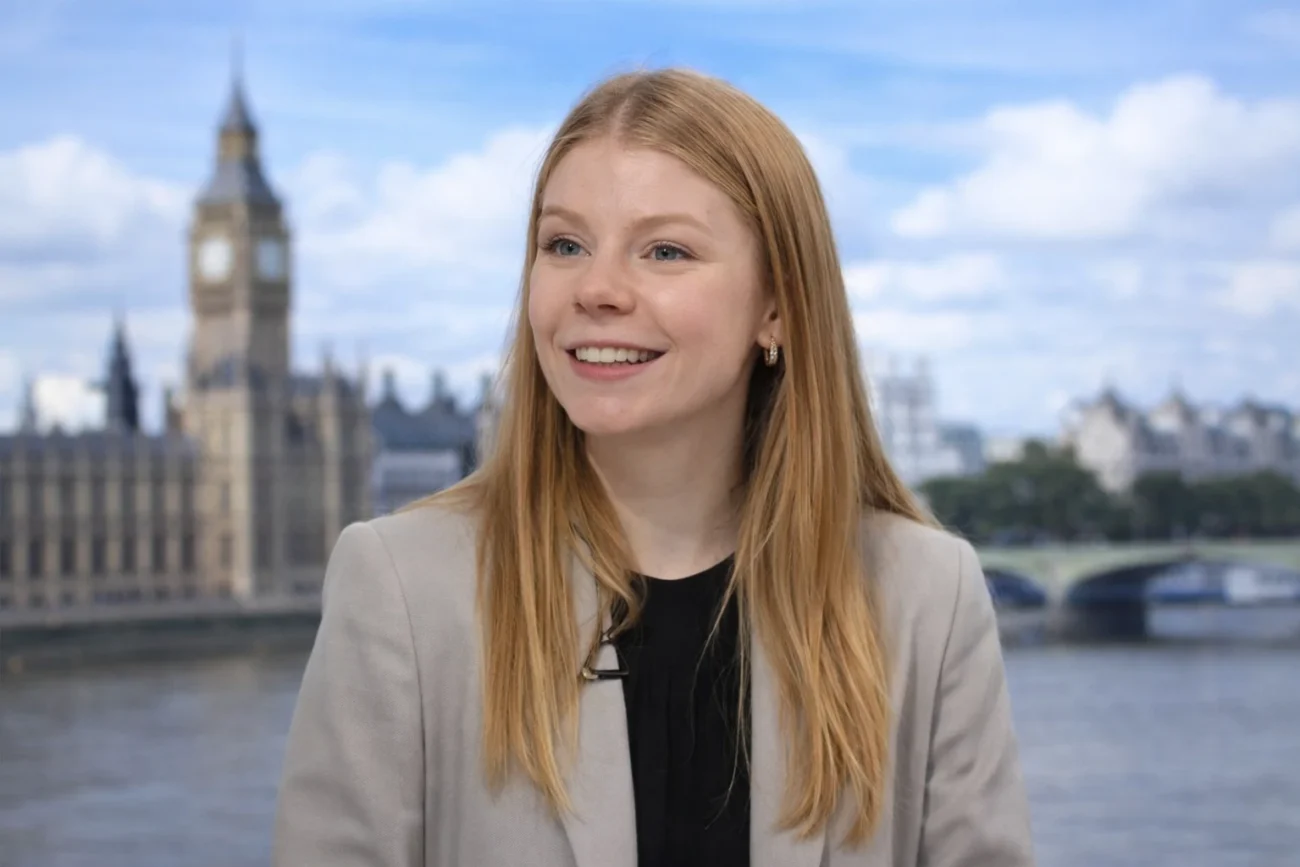
Ailbhe Rea is not a household celebrity, but in Westminster circles her name carries weight. She is one of those journalists whose byline signals access, context, and a certain fluency in the language of British politics. For readers who search “ailbhe rea wikipedia,” the goal is usually simple: to understand who she is, how she built her career, and why she appears so often in discussions about Labour, the Conservatives, and the machinery of government. What emerges is the portrait of a reporter who has quietly moved through some of the most influential political media institutions in the UK.
Her career has unfolded in public view but without the curated mythology that often surrounds better-known media figures. That makes her story both harder to pin down and more interesting to reconstruct. The available record points to a Belfast upbringing, an Oxford education, and a steady rise through political journalism, with roles at the New Statesman, POLITICO, Bloomberg, and again the New Statesman. The result is a profile built on work rather than spectacle, and on credibility rather than constant visibility.
Early Life and Family
Ailbhe Rea grew up in Belfast, a city whose political history continues to shape the way its residents understand power, identity, and public life. While detailed information about her family remains largely private, the fact of her Northern Irish background is one of the few widely confirmed personal details. It places her within a generation that came of age after the Good Friday Agreement, but still in the shadow of a deeply divided political culture.
Not many people know this, but Belfast has produced a number of journalists who later built careers in London’s political media. The experience of growing up in a place where politics is not abstract but embedded in daily life can sharpen a reporter’s instincts early. In Rea’s case, that background likely informed her later focus on political systems and internal party dynamics rather than surface-level commentary.
There is no strong public record detailing her parents, siblings, or early home life, and that absence is worth acknowledging. Unlike many public figures, Rea has not turned her personal background into part of her professional identity. What remains visible instead is the imprint of a place known for political awareness and debate, which aligns closely with the direction her career eventually took.
Education and Early Ambitions
Rea studied English and French at the University of Oxford, one of the most common educational pathways for British political journalists. Oxford’s influence on the UK media and political class is well documented, and its student environment often doubles as an informal training ground for future reporters, advisers, and politicians.
During her time at Oxford, she would have been exposed to student journalism, debate societies, and a network that feeds directly into Westminster. While there is no detailed public account of her specific extracurricular involvement, the degree itself suggests a grounding in language, analysis, and communication—skills that translate directly into political reporting.
What’s interesting is how many journalists from similar backgrounds initially aim for broader cultural or literary careers before gravitating toward politics. Rea’s eventual focus on Westminster suggests a shift from general writing to something more structured and consequential. Political journalism, after all, demands not only clarity of expression but also a deep understanding of institutions, personalities, and timing.
Entering Political Journalism
Rea’s early career steps are not extensively documented in the public domain, but by the late 2010s she had established herself at the New Statesman, a magazine with a long history of political commentary and reporting. The publication has often served as a platform for emerging political writers, particularly those interested in Labour politics and progressive thought.
Her role as a political correspondent at the New Statesman placed her inside one of the central hubs of British political journalism. That position involves more than writing articles; it requires building sources, attending party conferences, and tracking the shifting alliances that define Westminster. It is also a role where young journalists can quickly gain visibility if their reporting proves sharp and reliable.
What’s surprising is how quickly Rea moved from being one of many correspondents to a more recognizable voice within political media. Her work began to reflect a clear interest in the mechanics of power—how decisions are made, how factions operate, and how narratives are shaped behind the scenes. That focus would later define her work across multiple platforms.
The New Statesman Years
Rea’s association with the New Statesman has been one of the most consistent threads in her career. The magazine, founded in 1913, has long occupied a unique position in British media, combining opinion, reporting, and cultural commentary. Working there requires a balance between analysis and accessibility, something Rea’s writing has tended to reflect.
Her reporting has covered a range of topics, from Labour Party strategy to internal government debates. Rather than focusing solely on headline events, she has often written about the underlying dynamics that shape political outcomes. This includes factional disputes, leadership challenges, and the strategic decisions that rarely make it into official statements.
The New Statesman also provided a platform for her work in audio journalism. She became involved in the publication’s podcast, which gained recognition within the industry and won awards for political coverage. That expansion into podcasting marked an important shift, allowing her to reach audiences beyond traditional print readers.
POLITICO and Westminster Insider
Rea’s move to POLITICO marked another step in her development as a political journalist. POLITICO, originally an American outlet, has built a strong presence in Europe and the UK, with a focus on policy, governance, and insider reporting. It is known for its detailed coverage of political processes and its appeal to professionals within politics and media.
At POLITICO, Rea became associated with the podcast “Westminster Insider,” which aimed to explain how British politics works behind the scenes. The show offered listeners a deeper understanding of policy decisions, legislative processes, and political culture, often going beyond the headlines to explore the mechanics of power.
This period of her career highlighted her ability to translate complex political topics into accessible narratives. Podcasting demands a different skill set from writing, including conversational clarity and the ability to engage listeners without visual cues. Rea’s involvement in the show suggested a versatility that would become increasingly valuable in modern journalism.
Bloomberg and a Broader Editorial Role
In 2024, Rea joined Bloomberg as an associate editor in London, focusing on politics and finance. Bloomberg’s editorial approach differs from that of traditional political magazines, with a stronger emphasis on markets, economics, and global business. For a political journalist, this environment requires an expanded understanding of how policy decisions intersect with financial systems.
Her move to Bloomberg can be seen as part of a broader trend in journalism, where political reporters increasingly engage with economic and financial contexts. Governments do not operate in isolation, and decisions made in Westminster often have immediate implications for markets and international relations. Covering those intersections demands both subject knowledge and analytical skill.
While her time at Bloomberg added another dimension to her career, it did not represent a departure from political reporting. Instead, it broadened her perspective, allowing her to approach political stories with a deeper awareness of their economic consequences. That experience likely informed her later work upon returning to a more traditional political editorial role.
Return to the New Statesman
By 2026, Rea had returned to the New Statesman as political editor, a senior role that reflects both experience and editorial authority. The position involves overseeing political coverage, shaping editorial direction, and contributing analysis on major developments in British politics.
Her return to the publication suggests a continued alignment with its editorial style and audience. The New Statesman remains a key platform for political debate in the UK, and the role of political editor places Rea at the center of that conversation. It also indicates a level of trust from the publication’s leadership, given the responsibility associated with the position.
What stands out is the continuity in her career. Rather than moving away from political journalism, she has consistently deepened her involvement in it, moving between roles that expand her reach while maintaining a clear focus on Westminster. That consistency is one of the defining features of her professional identity.
Public Moments and Controversy
Rea’s career has not been defined by controversy, but one public moment brought her wider attention. In 2021, she wrote about an incident in which she said she had been groped by Stanley Johnson at the Conservative Party conference in 2019. Her decision to speak publicly about the experience contributed to a broader conversation about conduct in political spaces.
The article was notable not only for its content but also for its tone. Rea framed the experience within the context of workplace culture and the challenges faced by young journalists in political environments. The response to her account reflected ongoing debates about accountability and standards in public life.
While this episode is part of her public record, it does not define her career. Instead, it sits alongside her reporting as an example of how journalists can shape conversations not only through their work but also through their willingness to address personal experiences when they intersect with wider issues.
Personal Life and Privacy
Rea has kept her personal life largely out of the public eye. There is no widely confirmed information about her relationship status, marriage, or children, and she has not made these aspects of her life a focus of her public persona. This level of privacy is increasingly rare in an era where many public figures share personal details through social media.
The truth is, the absence of personal information often leads to speculation, particularly on biography websites that attempt to fill gaps with unverified claims. In Rea’s case, it is more accurate to acknowledge that her personal life is not publicly documented in detail. That choice aligns with a professional identity centered on reporting rather than personal branding.
Her approach reflects a broader trend among journalists who prefer to maintain a clear boundary between their work and their private lives. While this can make it harder for readers to form a complete picture, it also reinforces the credibility of her reporting by keeping the focus on her work rather than her personal story.
Net Worth and Income
There is no reliable public record of Ailbhe Rea’s net worth. Estimates that appear online are typically speculative and not supported by verifiable financial disclosures. As a journalist, her income would primarily come from her salary, along with any additional earnings from speaking engagements or media appearances.
Journalism, even at senior levels, does not generally produce the kind of wealth associated with entertainment or business figures. That said, positions such as political editor at a major publication suggest a stable and well-established professional standing. Any attempt to assign a specific net worth figure would be an estimate rather than a confirmed fact.
It is more useful to understand her financial position in terms of career progression. Moving through roles at the New Statesman, POLITICO, and Bloomberg indicates a trajectory of increasing responsibility and recognition within the industry. That progression, rather than any specific number, reflects her professional success.
Public Image and Influence
Rea’s public image is shaped less by visibility and more by credibility. She is known within political and media circles as a journalist who understands the workings of Westminster and can explain them clearly. Her work appeals to readers who want more than headlines and are interested in how decisions are actually made.
Her influence is also tied to the platforms she has worked for. The New Statesman, POLITICO, and Bloomberg each occupy distinct positions within the media landscape, and her presence in all three suggests a level of adaptability and trust. It also means her work reaches a diverse audience, from policy professionals to general readers.
What’s interesting is how her career reflects the changing nature of journalism. The combination of print, digital, and audio work shows how reporters now operate across multiple formats. Rea’s ability to move between these formats has helped sustain her relevance in a competitive and evolving field.
Where Ailbhe Rea Is Now
As of 2026, Ailbhe Rea serves as political editor at the New Statesman, a role that places her at the forefront of British political journalism. Her work continues to focus on Westminster, with coverage of Labour, government policy, and the broader political climate.
Her current position suggests a phase of consolidation rather than transition. Having moved through several major media organizations, she now holds a senior editorial role that allows her to shape coverage as well as contribute to it. This stage of her career is likely to define her long-term influence within the industry.
Looking ahead, her trajectory points toward continued prominence in political journalism. Whether through writing, podcasting, or editorial leadership, her work remains closely tied to the evolving story of British politics.
Frequently Asked Questions
Does Ailbhe Rea have a Wikipedia page?
There is no widely visible standalone English Wikipedia page dedicated to Ailbhe Rea as of 2026. This is one reason many readers search her name alongside “Wikipedia,” hoping to find a clear summary of her life and career. Instead, information about her is spread across media profiles, bylines, and secondary sources.
What is Ailbhe Rea known for?
She is known for her work as a political journalist covering Westminster. Her reporting focuses on party dynamics, policy decisions, and the internal workings of British politics. She has also gained recognition for her work in podcasting, particularly with shows that explain political processes in detail.
Where is Ailbhe Rea from?
Ailbhe Rea grew up in Belfast, Northern Ireland. This background is one of the few widely confirmed personal details about her and provides context for her interest in politics.
What is her current job?
As of 2026, she is the political editor at the New Statesman. This role involves overseeing political coverage and contributing analysis on major developments in British politics.
Did she work for Bloomberg?
Yes, she joined Bloomberg in 2024 as an associate editor covering politics and finance. This role expanded her focus to include the intersection of political decisions and economic systems.
Is Ailbhe Rea married?
There is no publicly confirmed information about her marital status or relationships. She has kept her personal life private, and reliable sources do not provide details on this aspect of her life.
Conclusion
Ailbhe Rea’s story is not one of sudden fame but of steady progression through the ranks of political journalism. Her career reflects a commitment to understanding and explaining the workings of power, rather than simply reporting its outcomes. That focus has earned her a place within the core group of journalists who shape how Westminster is covered and understood.
Her path from Belfast to Oxford and into London’s political media illustrates how background, education, and professional opportunity can intersect. At each stage, she has taken on roles that deepen her engagement with politics, moving from correspondent to podcast host to editor. The consistency of that trajectory is one of its most striking features.
There is also something telling about the way her story is told. The lack of a formal Wikipedia page, and the reliance on scattered sources, highlights the gap between public interest and available information. It suggests that not all influential figures fit neatly into the categories that traditional biography sites expect.
What remains clear is that Ailbhe Rea’s work continues to matter. As political editor at the New Statesman, she occupies a position that allows her to shape how political stories are reported and understood. For readers searching her name, the most useful answer is not a list of unverified details, but a clear account of a journalist whose influence comes from the work itself.
