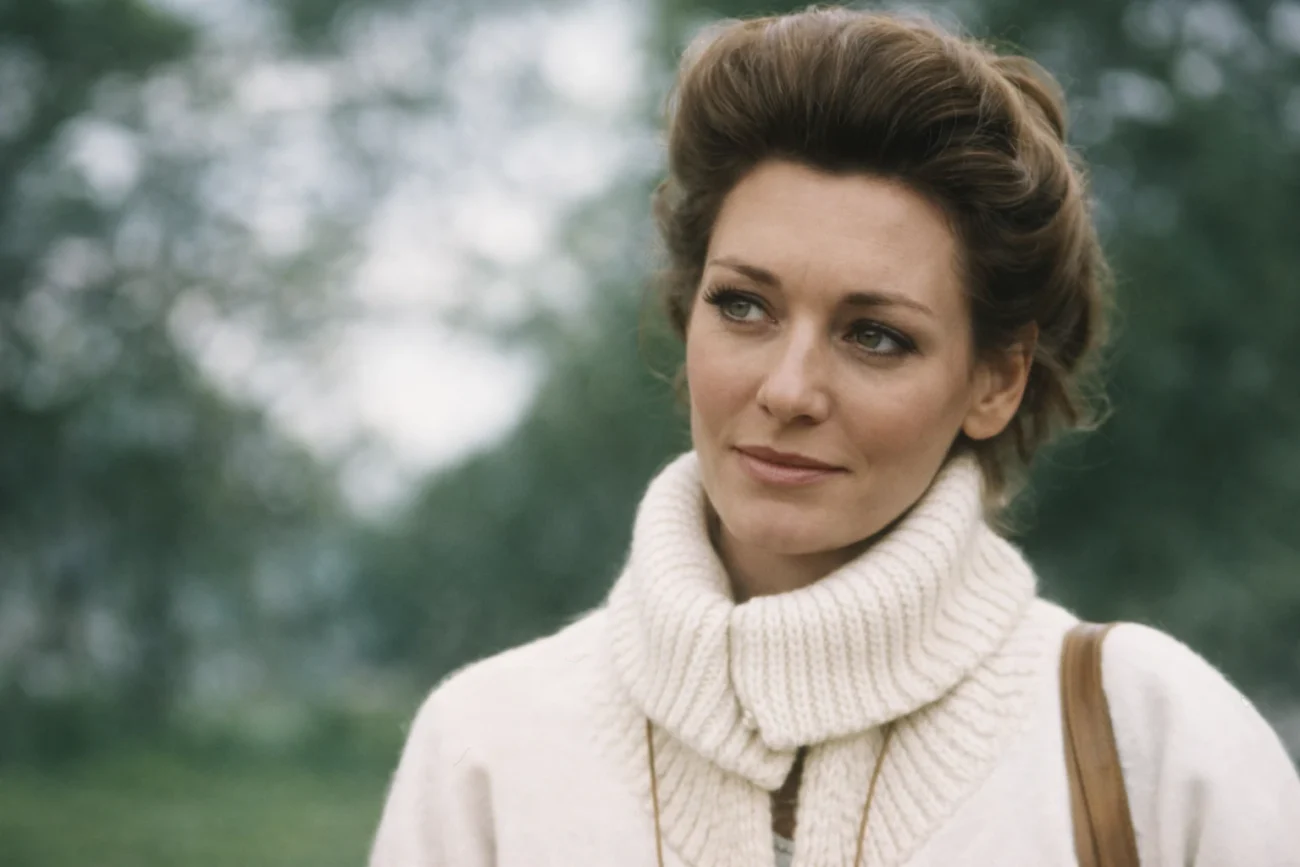
In the photographs, she stands just slightly apart from the chaos. The paddock is loud, restless, and crowded with drivers, mechanics, and cameras, but Marlene Knaus appears composed, watchful, and self-contained. It is the late 1970s, and Formula 1 is transforming into a global spectacle. At the center of it all is Niki Lauda—sharp, brilliant, and already becoming a legend. Just beside him, but never trying to compete for attention, is the woman who would become his first wife and the mother of his children.
For decades, Marlene Knaus has been known primarily through that proximity. Her name surfaces whenever Lauda’s story is told, especially in connection with the dramatic events of 1976, the year of his near-fatal crash and his astonishing return to racing. Yet the more people search for her, the more they encounter a paradox. She was visible during one of the most photographed eras in motorsport history, and still, very little about her personal life has been firmly documented.
That absence is not accidental. Marlene Knaus did not build a public persona, did not seek out interviews, and did not turn her connection to fame into a career. What remains is a life partially illuminated by history, and partially protected by silence.
Early Life and Background
The early life of Marlene Knaus is one of the least clearly documented parts of her biography, and that alone sets her apart from most figures associated with celebrity culture. Various sources offer different accounts of her birthplace and upbringing, with some suggesting Austrian roots and others pointing to a more international background. These claims are often repeated without strong sourcing, making it difficult to confirm details with certainty.
What can be said with confidence is that she emerged in European social circles during the 1960s and 1970s, a period when fashion, travel, and motorsport frequently overlapped. Photographs from that era suggest she was part of a cosmopolitan environment, moving comfortably among public figures and high-profile events. Her style, often described in retrospective accounts as understated but striking, aligned with the sleek aesthetic associated with Formula 1’s growing glamour.
Not many people know this, but the lack of confirmed information about her early years has shaped how her story is told. Without a clear origin narrative, she appears in the public record almost fully formed, already connected to a world of speed, wealth, and visibility. That absence of detail invites speculation, but it also underscores how little of her life was ever placed on public display.
Entering the World of Formula 1
Marlene Knaus entered the orbit of Formula 1 at a time when the sport was changing rapidly. By the mid-1970s, it had become a global attraction, drawing attention not only for its competition but also for its personalities. Drivers were becoming celebrities, and their lives off the track were increasingly part of the story.
It was within this environment that she met Niki Lauda, the Austrian driver whose analytical approach and relentless discipline set him apart from many of his contemporaries. Their relationship developed during a period when Lauda was rising quickly through the ranks, securing his place as one of the sport’s most formidable talents.
Here’s where it gets interesting. Their connection was not built on spectacle, even though they lived within it. While Lauda was known for his directness and intensity, Knaus presented a contrasting presence—calm, composed, and less inclined toward the spotlight. Together, they formed a partnership that reflected both the pressures and the allure of Formula 1 during its most dangerous era.
Marriage to Niki Lauda
Marlene Knaus and Niki Lauda married in 1976, a year that would become one of the most dramatic in motorsport history. Just weeks after their wedding, Lauda suffered a catastrophic crash at the Nürburgring, one of the most dangerous circuits in the world. His car burst into flames, leaving him with severe burns and life-threatening injuries.
The truth is, that moment defined not only Lauda’s career but also the public memory of their marriage. Knaus was present during his recovery, a period marked by uncertainty, pain, and an extraordinary determination on Lauda’s part to return to racing. He did so just six weeks later, a decision that astonished the sporting world and cemented his reputation as one of Formula 1’s toughest competitors.
Their marriage unfolded under the weight of that experience. The intensity of Lauda’s career, combined with the physical and emotional aftermath of the crash, shaped their lives in ways that were rarely discussed publicly. While images from the time show them together at races and events, the private reality of their relationship remained largely out of view.
Family Life and Children
Marlene Knaus and Niki Lauda had two sons together, Lukas and Mathias. Their family life, though connected to a highly visible sport, was kept relatively private, particularly when compared to the modern expectations placed on public figures.
Mathias Lauda would later follow in his father’s footsteps, becoming a professional racing driver. His career included participation in endurance racing and other motorsport competitions, extending the Lauda name into a new generation. Lukas, on the other hand, maintained a lower profile, though he has been described in various reports as being involved in managing aspects of his brother’s career.
What’s surprising is how little direct commentary exists from Knaus about motherhood or family life. Unlike many figures connected to celebrity families, she did not publish memoirs, give interviews, or otherwise shape her narrative for public consumption. As a result, much of what is known about this period comes through the broader context of the Lauda family rather than her own voice.
Divorce and Life After the Marriage
After fifteen years of marriage, Marlene Knaus and Niki Lauda divorced in 1991. The reasons for their separation were not widely discussed in detail, and both parties maintained a level of discretion that stands in contrast to the public handling of many high-profile divorces.
Following the divorce, Lauda would go on to have additional children and remarry, continuing to build a life that remained closely tied to both business and motorsport. Knaus, by contrast, stepped further away from public visibility, reinforcing a pattern that had already defined much of her adult life.
But here’s the thing. Her withdrawal from the spotlight did not erase her connection to Lauda’s story. As the mother of his children and a figure associated with one of the most defining periods of his life, she remained part of the narrative, even as she chose not to participate in it publicly.
Public Image and Media Portrayal
Marlene Knaus occupies a unique position in media history. She is both familiar and elusive, recognizable in photographs yet rarely heard in her own words. This has led to a public image shaped more by interpretation than by direct statement.
The 2013 film Rush played a significant role in renewing interest in her life. Portrayed by Alexandra Maria Lara, Knaus was presented as a supportive and emotionally grounded presence during Lauda’s recovery from his crash. The film introduced her to a new generation of viewers, many of whom were encountering her story for the first time.
That said, films are not historical records. While Rush drew from real events, it also relied on dramatization to tell a compelling story. The version of Marlene Knaus presented on screen reflects certain truths but cannot be taken as a complete or definitive account of her life.
Career, Work, and Financial Standing
One of the most frequently searched aspects of Marlene Knaus’s biography is her professional life. Many online profiles describe her as a model or socialite, often citing her presence in fashion-forward circles during the 1970s. However, the evidence supporting a formal modeling career is limited and often based on secondary or repeated sources.
There is no widely documented record of a sustained professional career in the traditional sense, nor is there clear information about business ventures or independent income streams. This absence has led to speculation about her financial standing, including estimated net worth figures that vary widely and are rarely backed by credible reporting.
The truth is, any discussion of her net worth remains speculative. While her marriage to Lauda would have placed her within a wealthy environment, the details of financial arrangements following their divorce have not been publicly disclosed. Without verified data, it is more accurate to acknowledge the uncertainty than to present unconfirmed figures as fact.
Where Marlene Knaus Is Now
The question of where Marlene Knaus lives today is one of the most common—and one of the least reliably answered. Various reports suggest she resides in Spain, particularly in Ibiza, but these claims are not supported by strong, verifiable sources.
What can be confirmed is that she remained connected to the Lauda family in later years. She was present at Niki Lauda’s funeral in Vienna in May 2019, appearing alongside other family members during a public farewell that drew global attention. That moment provided a rare recent glimpse of her in a public setting.
Beyond that, her current life remains largely private. There is no significant public record of recent interviews, appearances, or professional activities. In an era defined by constant visibility, her continued absence from the spotlight stands out as a deliberate and consistent choice.
Frequently Asked Questions
Who is Marlene Knaus?
Marlene Knaus is best known as the first wife of Formula 1 champion Niki Lauda and the mother of their two sons, Lukas and Mathias. She was part of the Formula 1 social scene during the 1970s but has maintained a private life outside of that association.
When did Marlene Knaus marry Niki Lauda?
She married Niki Lauda in 1976, during a pivotal year in his racing career that included his near-fatal crash and remarkable return to competition.
Does Marlene Knaus have children?
Yes, she has two sons with Niki Lauda: Lukas Lauda and Mathias Lauda. Mathias became a professional racing driver, continuing the family’s connection to motorsport.
What is Marlene Knaus’s profession?
Her professional background is not clearly documented. While some sources describe her as a model or social figure, there is limited verifiable evidence detailing a formal career.
Where is Marlene Knaus now?
Her current residence and daily life are not publicly confirmed. She has largely stayed out of the spotlight, with only occasional appearances, such as at Niki Lauda’s funeral in 2019.
Was Marlene Knaus portrayed in a film?
Yes, she was portrayed by Alexandra Maria Lara in the 2013 film Rush, which depicted the rivalry between Niki Lauda and James Hunt.
Conclusion
Marlene Knaus’s story resists easy categorization. She is neither a traditional celebrity nor a completely unknown figure, existing instead in the space between visibility and privacy. Her life intersects with one of the most compelling narratives in sports history, yet much of her own experience remains unspoken.
What defines her public identity is not a long list of achievements or a well-documented career, but her presence during a defining moment in Formula 1. She was there during Lauda’s rise, his near tragedy, and his return, offering a steady presence in a world that rarely paused.
The truth is, her decision to remain private has shaped how she is remembered. In a culture that often demands constant exposure, Marlene Knaus chose a different path. That choice, more than any single event, explains both the enduring curiosity about her life and the limits of what can be known.
Her story is not incomplete because something is missing. It is complete in a quieter way, defined by what was lived rather than what was publicly recorded. And for many readers, that makes her all the more compelling.
