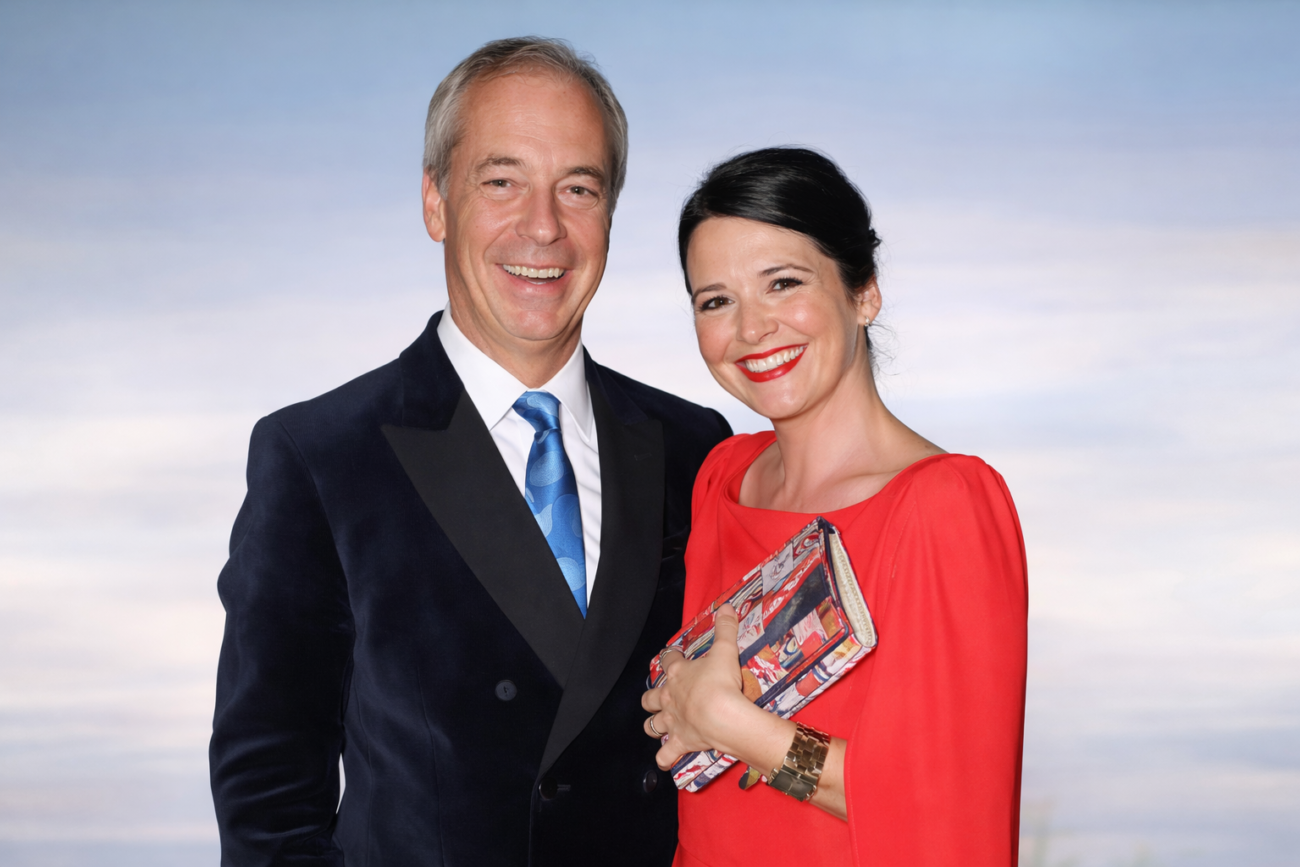
For most people, Gráinne Hayes enters the conversation sideways. Her name surfaces not because of a public career or media presence, but because of her connection to one of Britain’s most recognizable political figures, Nigel Farage. Yet that connection, while real, only tells part of the story. Hayes represents a different kind of biography—one shaped less by publicity and more by absence, restraint, and a life largely lived outside the public gaze.
That contrast is what makes her interesting. In an era when proximity to fame often leads to its own kind of visibility, Hayes chose, or at least maintained, a path that stayed almost entirely private. The result is a life that can be traced through a handful of confirmed facts, framed by a much larger space of silence. Understanding Gráinne Hayes, then, is not just about recounting what is known, but also about recognizing what remains deliberately or naturally out of view.
Early Life and Irish Background
Gráinne Hayes is widely described as Irish, and her name itself reflects a strong Irish heritage. However, beyond that, the public record offers very little detail about her early years. There are no widely verified accounts of her exact birthplace, her family background, or her childhood environment, and no confirmed information about her parents or siblings has entered the public domain.
That lack of detail can feel unusual, especially compared to the extensive documentation that often surrounds people connected to public figures. But it also suggests something important. Hayes’s early life appears to have unfolded entirely outside the kind of public or institutional spotlight that generates lasting records. She did not come to public attention through politics, media, or business, and as a result, her formative years remain largely undocumented.
What can be inferred, cautiously, is that she trained in nursing in Ireland, a profession that requires formal education and certification. While specific institutions are not publicly confirmed, nursing training typically involves a combination of academic coursework and clinical practice. This background would later become central to one of the defining moments of her life: her meeting with Nigel Farage.
A Nurse and a Chance Encounter
The story of how Gráinne Hayes met Nigel Farage is one of the few widely repeated elements of her biography, and it is tied to a serious accident that Farage suffered in 1985. At the age of 21, Farage was struck by a car in Orpington, Kent, an incident that left him with significant injuries and required a long period of recovery.
According to multiple biographical accounts of Farage’s life, Hayes was among the nurses involved in his care during this period. It was in this setting—far removed from politics or public life—that their relationship began. The detail is often cited because it offers a rare glimpse into Hayes’s professional role and personal connection at the same time.
The image is a striking one: a young nurse and a patient recovering from a life-altering accident, forming a bond that would lead to marriage. It is also one of the few moments where Hayes’s life intersects directly with a documented public event, giving the relationship a clear starting point anchored in verifiable history.
Marriage to Nigel Farage
Gráinne Hayes and Nigel Farage married in 1988, three years after his accident. At that time, Farage was not yet the political figure he would later become. He was working in commodities trading in the City of London, building a career that had little to do with the political stage he would eventually occupy.
The marriage belongs to a period of Farage’s life that is often described as formative but relatively private. His later rise in politics—through the United Kingdom Independence Party (UKIP), the Brexit campaign, and eventually Reform UK—would come years after the relationship had already ended. This timing helps explain why there is relatively little contemporary reporting about the marriage itself.
During their time together, Hayes and Farage had two children. Their sons, Samuel and Thomas, were born in 1989 and 1991 respectively. As with their mother, both have remained largely outside public view, and little detailed information about their lives has been widely reported.
The marriage lasted nearly a decade, ending in divorce in 1997. The reasons for the separation have not been extensively detailed in the public record, and both parties appear to have kept those aspects of their lives private. That silence has shaped how the relationship is remembered: as a significant chapter in Farage’s early life, but one that remains only lightly documented.
Life After Divorce
After the divorce in 1997, Gráinne Hayes largely disappeared from public-facing narratives. Unlike many individuals connected to high-profile figures, she did not give interviews, publish memoirs, or engage with media coverage of her former husband’s growing political career.
This absence is not accidental in the way it sometimes appears online. It reflects a consistent pattern: Hayes has not sought public attention and has not been drawn into it in any sustained way. As Farage’s profile grew—especially during the Brexit years—interest in his personal life inevitably followed, but Hayes remained largely beyond its reach.
There are occasional claims in online profiles about her later life, including suggestions about her residence or career path after the divorce. However, these claims are rarely supported by verifiable sources. The truth is that there is no widely confirmed account of what Hayes chose to do professionally or personally in the years that followed.
That may seem like a gap, but it is also a boundary. Hayes’s life after her marriage appears to have been lived on her own terms, outside the structures that generate public documentation.
Family and Children
The most enduring connection between Hayes and Farage remains their children. Samuel and Thomas Farage were born during the marriage, and they represent a shared family history that continues beyond the couple’s separation.
Public information about the sons is limited, which is consistent with the broader pattern of privacy surrounding Hayes. They have not pursued high-profile public roles, and their appearances in media coverage are rare. This suggests a family approach that has prioritized personal space over visibility.
What can be said is that Hayes’s role as a mother is one of the few clearly defined aspects of her life beyond her marriage. While details remain private, the fact of raising two children during the early years of Farage’s career adds an important dimension to her story. It places her not only in a personal relationship with a future political figure, but also in the context of family life during a period of transition and ambition.
Public Image and Media Portrayal
Gráinne Hayes does not have a conventional public image because she has not participated in shaping one. There are no official profiles, no verified social media presence, and no body of interviews through which she has presented her own perspective.
Instead, her public image is constructed indirectly, through references in biographies of Nigel Farage and through secondary articles that attempt to fill in the gaps. This creates a particular kind of challenge. Without direct input or extensive documentation, narratives about Hayes can easily drift into speculation.
Many online articles attempt to expand her story by adding details about her personality, lifestyle, or current circumstances. But here’s where caution matters. Without clear sourcing, those additions risk turning a limited factual record into something that appears more complete than it really is.
The more accurate way to understand her public image is to recognize its limits. Hayes is known primarily through her connection to a public figure, and beyond that, she remains a private individual whose life has not been widely chronicled.
The Question of Net Worth and Financial Life
One of the most common search queries about Gráinne Hayes concerns her net worth. This reflects a broader trend in online biography, where financial estimates are often treated as a standard component of any profile.
In Hayes’s case, however, there is no reliable, publicly verified figure for her net worth. Unlike public figures who disclose assets or whose earnings can be tracked through careers in business or entertainment, Hayes has not been part of a profession that generates widely reported financial data.
Some websites offer estimated figures, but these are typically speculative and not backed by clear evidence. Without confirmed information about her career after her divorce or her financial activities, any attempt to assign a precise value to her net worth should be treated with skepticism.
What can be said is that her financial life has remained private, much like the rest of her post-marriage experience. That privacy makes definitive statements difficult, and responsible reporting requires acknowledging that limitation.
Relationship to Nigel Farage’s Public Career
Nigel Farage’s political rise has shaped much of the interest in Gráinne Hayes. From his early involvement in UKIP to his role in the Brexit referendum and his later return to Parliament, Farage has remained a central figure in British political debate.
Hayes’s marriage to Farage belongs to a period before that prominence, which gives her a unique place in his personal timeline. She was part of his life during years that were less visible but still formative, before his transition into full-time politics.
That said, there is no evidence to suggest that Hayes played a public or strategic role in his political development. Her connection to his career is indirect, rooted in shared history rather than public collaboration. This distinction matters because it helps define the limits of her public relevance.
A Life Defined by Privacy
What stands out most about Gráinne Hayes is not a list of achievements or a series of public appearances, but the consistency of her privacy. In a media environment that often draws in anyone connected to a well-known figure, she has remained largely outside its reach.
This does not mean her life lacks substance or significance. It means that its details have not been made public, either by her own choice or by circumstance. That difference is important. A private life is not an incomplete one; it is simply one that is not documented for public consumption.
There is also a broader cultural context to consider. In earlier decades, it was more common for individuals connected to public figures to remain out of the spotlight. Hayes’s experience reflects that earlier pattern, even as the expectations around visibility have changed.
Where Gráinne Hayes Is Now
The question of where Gráinne Hayes is today does not have a clear, publicly confirmed answer. There are no verified reports detailing her current residence, professional activities, or public engagements.
What can be said is that she has not re-emerged into public life in any significant way. She does not appear in political coverage, media interviews, or public events linked to her former husband’s career. This continued absence suggests that her preference for privacy has remained consistent over time.
For readers, that means accepting a certain level of uncertainty. The available information provides a clear outline of her past, but it does not extend fully into the present.
Frequently Asked Questions
Who is Gráinne Hayes?
Gráinne Hayes is an Irish nurse best known as the first wife of British politician Nigel Farage. Her public profile is limited, and most information about her comes from biographical accounts of Farage’s life rather than from independent coverage of her own career.
How did Gráinne Hayes meet Nigel Farage?
They met after Farage was seriously injured in a car accident in 1985. Hayes was part of the nursing team involved in his care, and their relationship developed during his recovery period.
When were Gráinne Hayes and Nigel Farage married?
The couple married in 1988 and remained together for nearly a decade before divorcing in 1997. Their marriage took place before Farage became widely known in British politics.
Do Gráinne Hayes and Nigel Farage have children?
Yes, they have two sons, Samuel and Thomas, born in 1989 and 1991. Both have largely stayed out of the public eye, similar to their mother.
What does Gráinne Hayes do now?
There is no confirmed public information about her current occupation or activities. She appears to have maintained a private life and has not been active in public or media-facing roles.
What is Gráinne Hayes’s net worth?
There is no reliable, verified figure for her net worth. Any estimates found online are speculative and should be treated with caution due to the lack of confirmed financial information.
Conclusion
Gráinne Hayes is not a conventional public figure, and her biography reflects that difference. She is known through a specific chapter of her life—her marriage to Nigel Farage—but beyond that, she remains largely undocumented. That combination of visibility and privacy shapes how her story is told.
The facts that are available form a clear but limited outline: an Irish nurse, a marriage in 1988, two children, and a divorce in 1997. Everything else exists in a space where evidence is either scarce or absent. For a reader, that means approaching her story with care, separating what is confirmed from what is assumed.
What stays with you, in the end, is not a sense of missing information but a recognition of boundaries. Hayes’s life has unfolded largely outside public view, and that in itself is part of her story. In a culture that often expects constant visibility, her privacy stands as a quiet but meaningful counterpoint.
That may be the most accurate way to understand Gráinne Hayes: not as a hidden figure waiting to be fully revealed, but as someone whose life has simply taken place beyond the reach of public narrative.
