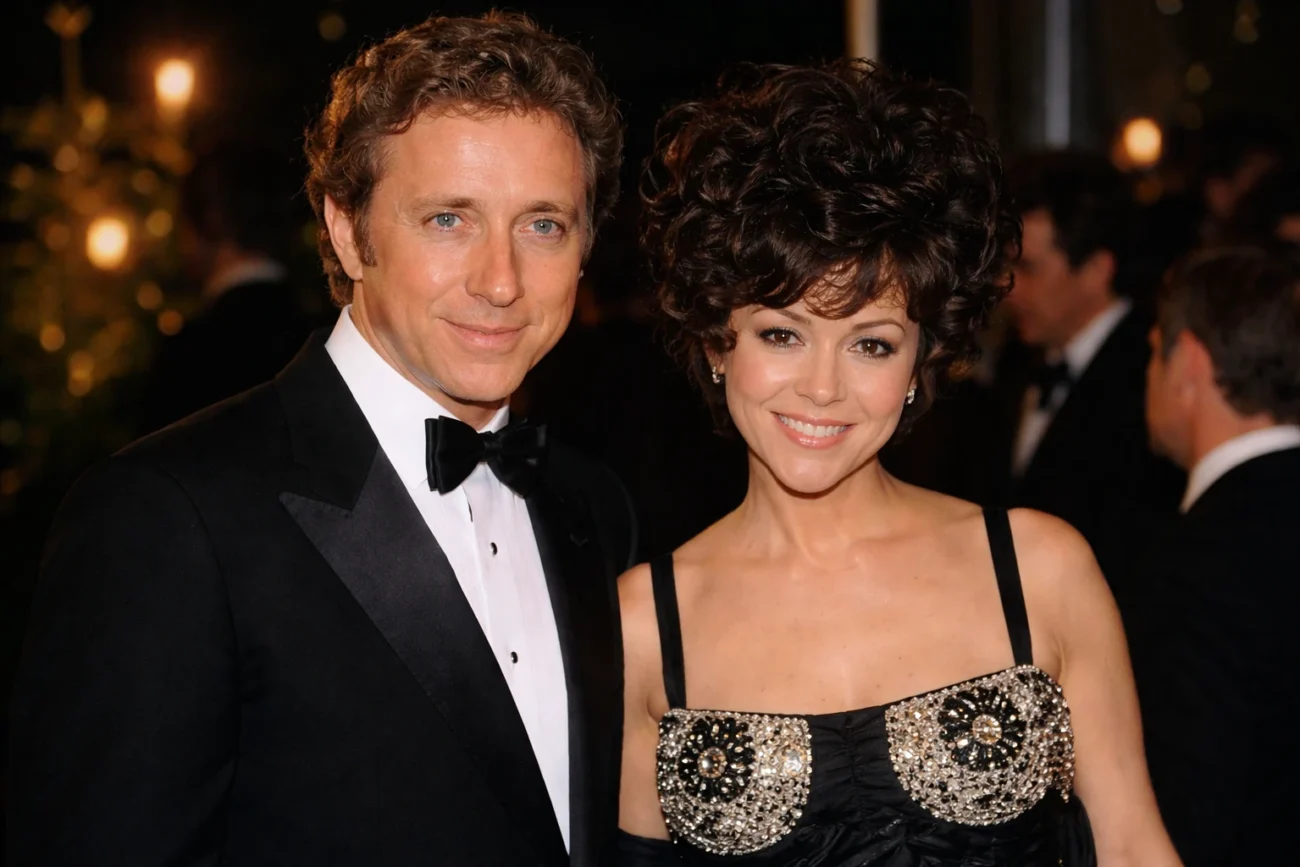
Mary Joan Schutz enters the historical record almost sideways, as a name that appears in the margins of Gene Wilder’s life and then quietly recedes. She was not a performer, not a public figure in the traditional sense, and not someone who seemed interested in attention. Yet for a crucial stretch in the late 1960s and early 1970s, she stood at the center of Wilder’s personal life—his wife, the mother of his adopted daughter, and part of a family story that would later carry emotional weight long after the marriage ended.
For many readers, her name surfaces through curiosity about Wilder himself. Who was the woman he married during his rise to fame? What role did she play in his life, and what became of her afterward? The answers exist, but they are partial, shaped by the limits of public record and by Schutz’s own distance from publicity. What emerges is less a traditional celebrity biography and more a careful reconstruction of a life that intersected with fame without ever embracing it.
Early Life and Background
The earliest chapter of Mary Joan Schutz’s life is also the least documented. Unlike actors, writers, or public figures whose childhoods are chronicled in interviews and press archives, Schutz left behind no widely available account of her upbringing. There are no confirmed public records that clearly establish her birth date, hometown, or education in a way that can be reliably traced across reputable sources.
That absence has led to a wave of speculative profiles online, many of which offer detailed claims about her early life. These claims often repeat one another but rarely point back to primary documentation. Without verifiable sources, such details remain uncertain, and responsible reporting must leave them unconfirmed.
What can be said with some confidence is that Schutz was an adult with an established personal life before she met Gene Wilder. She had already been married or in a serious relationship and had a daughter, Katharine. That fact becomes central to understanding her later role in Wilder’s life, because it shaped not just their marriage but his experience of fatherhood.
Meeting Gene Wilder
Mary Joan Schutz met Gene Wilder during a period when his career was beginning to take shape. Wilder, born Jerome Silberman in 1933, had trained as an actor and was building his reputation in theater before transitioning into film. By the mid-1960s, he was still relatively unknown to the wider public, even as he worked steadily and attracted attention within the industry.
Accounts of how Schutz and Wilder met are not deeply documented, but it is clear that their relationship developed quickly enough to lead to marriage in 1967. At that point, Wilder was on the edge of a breakthrough. His appearance in Bonnie and Clyde had just introduced him to film audiences, and his role in Mel Brooks’s The Producers would soon bring him widespread recognition.
The timing of their relationship is significant. Schutz was not entering the life of an established movie star but that of a working actor whose future was still uncertain. That context adds depth to the relationship, suggesting a partnership formed before the full weight of fame arrived.
Marriage and Family Life
Mary Joan Schutz married Gene Wilder in 1967, marking the beginning of a relationship that would coincide with one of the most dynamic periods of his career. Around the same time, Wilder adopted Katharine, Schutz’s daughter from a previous relationship. This decision transformed the couple into a family unit and made Wilder a father.
According to widely cited summaries of Wilder’s memoir Kiss Me Like a Stranger, the adoption was a deeply personal choice. Katharine had begun calling him “Dad,” and Wilder responded by formalizing that bond. The adoption stands as one of the clearest and most meaningful actions associated with Schutz’s place in his life.
Family life during these years unfolded alongside Wilder’s growing fame. Films such as The Producers (1968) and later Willy Wonka & the Chocolate Factory (1971) and Blazing Saddles (1974) would cement his status as a major figure in American cinema. Schutz, by contrast, remained outside the spotlight, with no public-facing career tied to the entertainment industry.
That contrast is important. While Wilder’s professional life expanded rapidly, Schutz’s role appears to have remained grounded in private life. There are no substantial records of her seeking media attention, attending high-profile events, or cultivating a public persona. She existed within the orbit of fame without becoming part of it.
The Rise of Gene Wilder and Its Impact
The late 1960s and early 1970s were transformative for Gene Wilder. His collaborations with Mel Brooks brought him critical acclaim and commercial success, and his distinctive screen presence made him one of the most recognizable actors of his time. This period defined his career and continues to shape how he is remembered.
For Mary Joan Schutz, this rise would have had indirect but significant effects. Being married to a rapidly ascending actor often brings changes in lifestyle, social environment, and public scrutiny. Yet there is little documented evidence of how Schutz experienced these shifts personally.
What can be inferred is that the balance between public success and private life may have grown more complicated as Wilder’s career intensified. The demands of filmmaking, travel, and publicity can strain relationships, and their marriage unfolded during a period when Wilder’s professional commitments were expanding quickly.
Still, without firsthand accounts from Schutz, these dynamics remain largely interpretive. The public record tells us what was happening around her, but not precisely how she navigated it.
The Marriage Breakdown
Mary Joan Schutz and Gene Wilder’s marriage ended after approximately seven years, with their separation occurring in the mid-1970s. The reasons behind the breakup have been discussed in various secondary accounts, though the details are not consistently supported by strong primary sources.
Some narratives suggest that suspicions of infidelity contributed to the breakdown of the relationship. These accounts often reference tensions involving Wilder’s professional relationships during that time. However, because Schutz did not publicly speak in detail about the divorce, and because much of the available information comes from retrospective summaries, the exact circumstances remain partially unclear.
What is more firmly established is the aftermath. The end of the marriage led to a rupture in Wilder’s relationship with Katharine, the daughter he had adopted. Later accounts of Wilder’s life describe this estrangement as a source of lasting pain for him.
This outcome gives the marriage a deeper emotional dimension. It was not only a partnership that ended but also a family connection that fractured. Schutz’s role in this period is central, even if her own perspective is not widely documented.
Life After Divorce
After her divorce from Gene Wilder, Mary Joan Schutz largely disappeared from the public eye. Unlike many people connected to celebrities, she did not capitalize on her association with a famous figure. She did not publish memoirs, grant high-profile interviews, or maintain a visible presence in media or entertainment circles.
This withdrawal has shaped how her life is remembered. Without ongoing public activity, there are few records to track her later years. Some modern websites attempt to fill this gap with detailed claims about her residence, career, or personal circumstances, but these claims often lack reliable sourcing.
The truth is that her post-divorce life remains mostly private. This is not unusual, but it stands out in a digital era where personal histories are often documented in detail. Schutz’s absence from that pattern suggests a deliberate or at least consistent preference for privacy.
Public Image and Media Portrayal
Mary Joan Schutz’s public image is unusual because it is defined largely by absence. She is known through association rather than through direct public engagement. As a result, the way she is portrayed depends heavily on how others have described or contextualized her.
In many online biographies, she is presented as a supportive spouse or a quiet figure behind a rising star. These descriptions are often generalized and not tied to specific interviews or documented observations. While they may reflect common assumptions, they do not carry the weight of verified evidence.
What stands out instead is her decision not to participate in the public narrative. She did not become a recurring figure in coverage of Wilder’s life, even as his fame grew. That choice has preserved a degree of distance and has limited the amount of reliable information available.
Financial Standing and Net Worth
There is no confirmed public record of Mary Joan Schutz’s personal net worth. Estimates that appear online are typically speculative and not backed by verifiable financial disclosures or credible reporting. As a result, they should be treated with caution.
Her financial situation during her marriage to Gene Wilder would have been tied, at least in part, to his career earnings. Wilder achieved significant success in film, particularly in the 1970s, which likely influenced their shared financial environment during those years.
After the divorce, however, there is little publicly documented information about her income, career, or financial status. Without reliable data, any attempt to assign a specific net worth figure would be guesswork rather than fact.
Where Mary Joan Schutz Is Now
One of the most common questions readers ask is what became of Mary Joan Schutz. The honest answer is that her current status is not clearly documented in widely accessible, reliable sources. Some online profiles claim that she is still alive and living privately, but these claims are not supported by strong evidence.
This uncertainty reflects the broader pattern of her life. She has remained outside the public sphere for decades, and there is no clear record of her activities in recent years. In a media environment that often tracks individuals continuously, her absence is striking.
That absence does not diminish her significance. It simply underscores the fact that not every life connected to fame continues within it. Schutz appears to have chosen a different path, one that kept her story largely her own.
Frequently Asked Questions
Who is Mary Joan Schutz?
Mary Joan Schutz is best known as the former wife of actor Gene Wilder and the mother of Katharine, whom Wilder adopted. She was part of his personal life during a key period in his career but did not pursue a public role herself. Most of what is known about her comes from her connection to Wilder rather than from independent public records.
Was Mary Joan Schutz Gene Wilder’s first wife?
No, she was not his first wife. Gene Wilder was previously married to Mary Mercier from 1960 to 1965. Mary Joan Schutz became his second wife when they married in 1967. This distinction is often misunderstood in online biographies that simplify his marital history.
Did Gene Wilder have children with Mary Joan Schutz?
Gene Wilder did not have biological children with Mary Joan Schutz, but he adopted her daughter, Katharine. He treated Katharine as his own child, and the adoption was an important part of their family life. Later, their relationship became strained after the divorce.
Why did Mary Joan Schutz and Gene Wilder divorce?
The exact reasons for their divorce are not fully documented in reliable public sources. Some accounts suggest that tensions related to suspected infidelity played a role, but these details are not consistently verified. What is clear is that the marriage ended after about seven years and led to lasting personal consequences.
Is Mary Joan Schutz still alive?
There is no confirmed, widely accepted public record that definitively states her current status. Some sources suggest she is still living privately, but these claims lack strong verification. Her later life remains largely undocumented in the public domain.
What did Mary Joan Schutz do professionally?
There is no clear, well-documented account of her professional career in publicly available sources. Unlike Gene Wilder, she did not have a career in entertainment or another field that drew public attention. Most available information focuses on her personal life rather than her work.
Conclusion
Mary Joan Schutz occupies a quiet but meaningful place in the story of Gene Wilder’s life. She was present during a period of change, part of a family that shaped his personal identity, and connected to one of the more emotional chapters of his history. Her influence is felt through those connections rather than through a public career or lasting media presence.
What makes her story compelling is not what is widely known but what remains unknown. The gaps in the record are not failures of research alone; they reflect a life lived largely outside public scrutiny. In a culture that often seeks complete narratives, her story resists that expectation.
Her life reminds us that not every person linked to fame becomes part of its ongoing narrative. Some remain defined by a moment of intersection and then step away. Mary Joan Schutz did just that, leaving behind a story that is brief in documented detail but enduring in its human significance.
Her name continues to appear because it is tied to a figure whose work endures. But beyond that connection, she remains a private individual whose life, for the most part, belongs only to herself. That, perhaps, is the most accurate and respectful way to understand her place in history.
