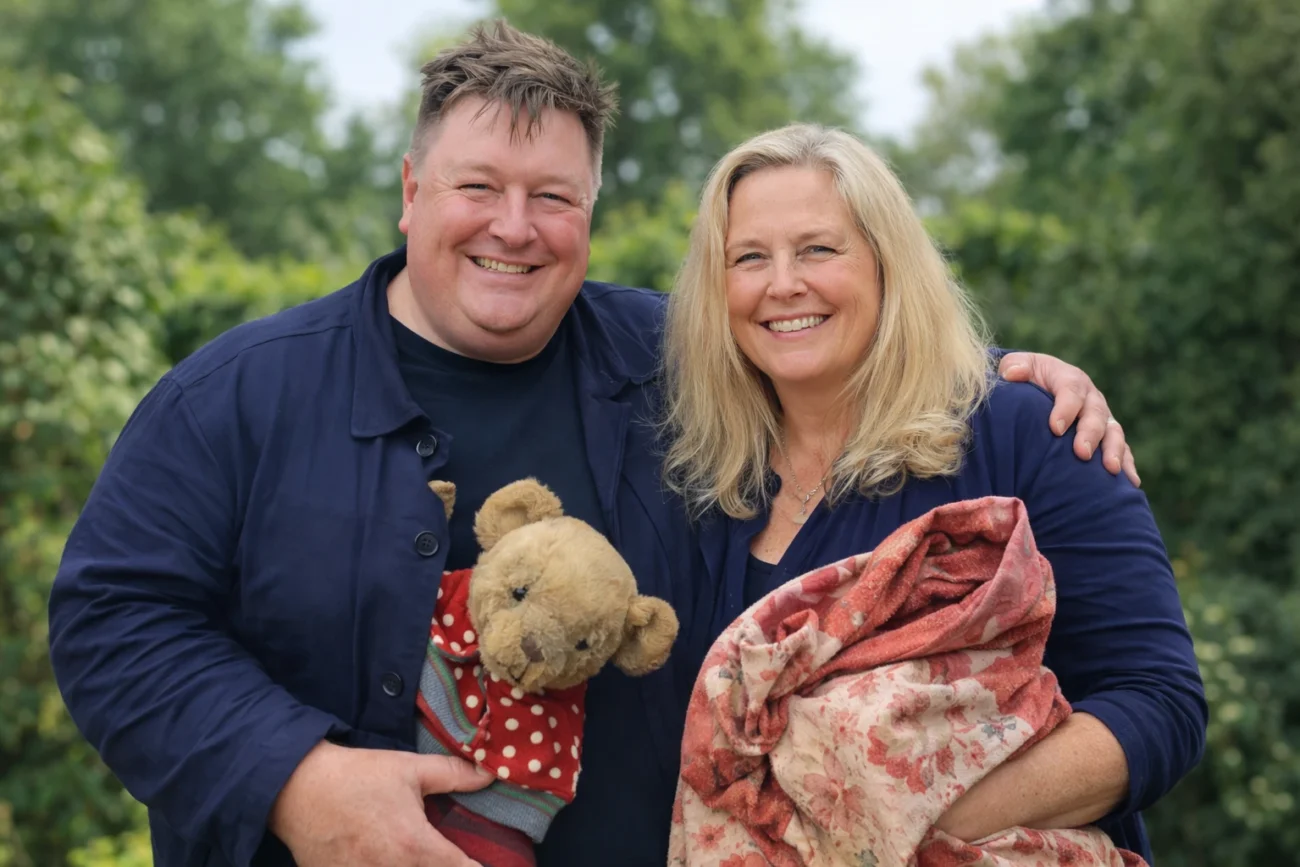
On television, Adi Higham is easy to place. He stands among fellow dealers on BBC’s The Bidding Room, assessing objects with a mix of instinct and experience, speaking in the calm, measured tone of someone who has spent decades around antiques. But off-screen, the picture is less neatly defined. Viewers who search for “Adi Higham wife” often expect a clear, documented answer. What they find instead is a quieter, more grounded story—one built around partnership, shared work, and a life that has largely stayed out of the spotlight.
At the center of that story is Tara Franklin, a name closely tied to Higham’s personal and professional world. She is widely described as his partner and collaborator, and in many corners of the internet, she is referred to as his wife. Yet the strongest publicly verifiable material tends to use more careful language. What emerges, when the available record is read closely, is not just a relationship label but a working partnership that has shaped both of their careers.
Early Life and Background of Adi Higham
Adrian Higham, known professionally as Adi Higham, has built a reputation as a knowledgeable antiques dealer with a strong eye for decorative pieces. While his television appearances have brought him wider recognition, much of his career was formed long before he appeared on screen. Public information about his early life is limited, which is not unusual for figures rooted in trade rather than entertainment.
What can be said with confidence is that Higham developed his expertise through years of hands-on experience. Dealers like him typically learn by buying, selling, and traveling—often across Europe—rather than through formal academic routes. His later comments about sourcing items in France suggest that cross-border buying has long been part of his professional life.
This background matters because it helps explain why his personal life is less documented than his work. Higham came into broader public awareness later in life, and his reputation was already established within antiques circles. As a result, the record that exists is stronger on his business and trade activity than on private details.
Building a Career in Antiques
Higham’s career reflects a steady, experience-driven path rather than a sudden rise. He is associated with Hoof Brocante, an antiques business based in the southeast of England. The business has become a recognizable name among collectors who appreciate French decorative items, textiles, and carefully sourced vintage pieces.
The word “brocante” itself signals a particular approach. It refers to a style of antiques dealing rooted in French markets and informal trading spaces, where objects are valued as much for their character as for their provenance. Higham’s work fits comfortably within that tradition, favoring aesthetic appeal and lived history over strictly academic collecting.
Over time, this approach found a wider audience. Television appearances, particularly on The Bidding Room, introduced Higham to viewers who might not otherwise have encountered brocante-style dealing. The show’s format—where dealers compete to buy items—allowed him to demonstrate both his expertise and his instincts, bringing his professional world into a more public setting.
Tara Franklin: Partner, Dealer, and Collaborator
If Higham represents one half of the story, Tara Franklin represents the other. She is consistently linked to Hoof Brocante and appears in business records as a director connected to the enterprise. Beyond that, trade coverage and event listings point to her as an established dealer in her own right.
Franklin has been associated with antiques fairs, including events in Kent, and is known for working with textiles and decorative items. These details may seem small, but they help build a clearer picture. She is not simply a background figure; she is part of the operational and creative side of the business.
What’s surprising is how often her influence appears in indirect ways. Higham has referenced “Tara my partner” when discussing his buying decisions, suggesting that her perspective has shaped the kinds of objects they source. That kind of shared decision-making is typical in successful antiques partnerships, where taste and instinct are often refined through collaboration.
Marriage or Long-Term Partnership?
The question at the heart of the search term remains: is Tara Franklin Adi Higham’s wife? The answer depends on how strictly one defines public confirmation. Several biography-style websites refer to her as his wife, and some even describe her as a second spouse following an earlier marriage. However, these claims are rarely backed by primary sources such as interviews, official statements, or public records that explicitly confirm marital status.
In contrast, more reliable material tends to describe Franklin as Higham’s partner. That language appears in interviews and aligns with what can be verified through business documentation. It reflects a relationship that is both personal and professional, without making assumptions that cannot be firmly supported.
This distinction is not trivial. In an era where online biographies often repeat one another, the difference between “wife” and “partner” can become blurred. Higham’s case shows how easily a label can spread without clear sourcing. Readers looking for accuracy are better served by recognizing the limits of what is publicly documented.
A Shared Business: Hoof Brocante
One of the clearest links between Higham and Franklin is their shared business venture. Hoof Brocante operates as both a retail space and a sourcing operation, drawing on connections in France and the UK. The business reflects a particular style, combining rustic charm with curated antiques that appeal to collectors and interior designers alike.
Running a brocante business is not a casual undertaking. It involves travel, negotiation, restoration, and presentation, often requiring a deep understanding of both markets and aesthetics. The fact that both Higham and Franklin are listed as directors of the associated company suggests a formal and ongoing collaboration.
This shared work provides a more concrete picture of their relationship than any label. It shows how their lives intersect daily, not just in personal terms but in the decisions that shape their business. For many couples in the antiques trade, this kind of partnership is both common and essential.
Personal Life and Privacy
Higham’s personal life remains relatively private, which has likely contributed to the ongoing curiosity around his relationships. Unlike celebrities who share details through social media or interviews, he has maintained a degree of separation between his public persona and his private world.
There are references in secondary sources to a previous marriage and the death of a first wife in 2003. These claims appear across multiple biography sites, but they are not strongly supported by primary reporting. As a result, they should be treated with caution, acknowledged as widely circulated but not deeply documented.
This limited visibility is not unusual for individuals whose careers are rooted in trade rather than entertainment. It reflects a different kind of public life, one where professional reputation matters more than personal exposure. For readers, it means accepting that some details may remain unclear.
Television Exposure and Public Recognition
Higham’s appearances on The Bidding Room have brought him into a broader cultural conversation. The show itself has become a staple of British daytime television, offering a platform for dealers to showcase their knowledge and instincts. Higham’s presence on the program has helped reinforce his credibility while introducing him to new audiences.
Television exposure often changes how viewers perceive personal lives. Once a figure appears regularly on screen, audiences begin to look beyond the role they play. In Higham’s case, this has translated into increased searches about his family, his background, and his relationships.
But here’s the thing. Television can create a sense of familiarity that is not always matched by available information. Viewers may feel they know someone because they see them regularly, even if key aspects of that person’s life remain private. Higham’s situation reflects that gap between perception and documented reality.
Financial Standing and Net Worth
Estimating the net worth of an antiques dealer is challenging, especially when the individual does not publicly disclose financial details. Higham’s income is likely tied to multiple streams, including television appearances, business operations, and private sales. Each of these can vary significantly depending on market conditions and individual transactions.
Some online sources provide net worth estimates, but these figures are often speculative and lack clear sourcing. Without verified financial disclosures, any number should be treated as an approximation rather than a confirmed fact. What can be said is that long-term success in the antiques trade typically reflects both expertise and sustained business activity.
Hoof Brocante’s continued operation and public presence suggest a stable enterprise. Combined with Higham’s television work, this points to a professional life that is both active and established, even if precise financial details remain private.
Public Image and Industry Standing
Within the antiques community, reputation is built over time through consistency and trust. Higham’s career reflects these qualities, with a focus on decorative antiques and a style that appeals to a broad audience. His television appearances have reinforced this image, presenting him as approachable yet knowledgeable.
Franklin’s role in this public image is quieter but no less important. As a dealer and organizer of fairs, she contributes to the broader network that sustains the antiques trade. Together, they represent a model of partnership that blends personal and professional life.
Their shared presence in the industry also highlights the collaborative nature of antiques dealing. Success often depends on relationships, whether with suppliers, clients, or fellow dealers. In this context, the Higham-Franklin partnership fits naturally within the traditions of the trade.
Where They Are Now
Recent indications suggest that both Higham and Franklin remain active in their field. Hoof Brocante continues to operate, and Franklin’s involvement in antiques fairs and online sales points to ongoing engagement with the market. While neither maintains a highly visible public profile, their work continues to connect them with collectors and enthusiasts.
Social media offers occasional glimpses into this activity, showing items for sale and updates from the business. These glimpses are limited but consistent, reinforcing the sense of continuity in their professional lives. For readers, they provide a way to see how the partnership functions in the present.
What stands out is the steady nature of their work. Rather than dramatic shifts or headline-making developments, their story is one of persistence and shared effort. That kind of continuity is often less visible but no less significant.
Frequently Asked Questions
Is Tara Franklin Adi Higham’s wife?
Tara Franklin is most reliably described as Adi Higham’s partner and business collaborator. While some online biographies refer to her as his wife, the strongest publicly verifiable sources tend to use the term “partner.” Without a clear primary confirmation, it is more accurate to use that wording.
What does Tara Franklin do for a living?
Tara Franklin works as an antiques dealer, with a focus on textiles and decorative items. She is also involved in organizing antiques fairs and is connected to Hoof Brocante, the business she shares with Adi Higham. Her role extends beyond support, reflecting active participation in the trade.
Do Adi Higham and Tara Franklin run a business together?
Yes, they are both associated with Hoof Brocante and are listed as directors of a company connected to the business. This shared enterprise forms a central part of their professional relationship and provides clear evidence of their collaboration.
Was Adi Higham married before?
Some secondary sources claim that Adi Higham was previously married and that his first wife died in 2003. However, these claims are not strongly supported by primary reporting, so they should be treated with caution.
Why is there confusion about his wife?
The confusion comes from repeated claims across biography-style websites that are not always backed by strong sources. Once a particular version of a story appears online, it is often copied by others, creating the appearance of consensus even when evidence is limited.
Is Adi Higham still active on television?
Adi Higham is known for his appearances on The Bidding Room, and he remains associated with the antiques trade. While television schedules can change, his professional activity continues through his business and trade involvement.
Conclusion
Adi Higham’s story is not one of dramatic headlines or constant public attention. It is a quieter narrative, shaped by years in the antiques trade and a partnership that blends personal and professional life. Tara Franklin stands at the center of that story, not just as a figure of curiosity but as a collaborator whose influence is woven into the business they share.
The search for “Adi Higham wife” reflects a broader desire to understand the people behind familiar faces. In this case, the answer is less about a single label and more about the relationship itself. Whether described as a partner or a spouse, Franklin’s role is defined by shared work, shared decisions, and a long-standing connection to Higham’s career.
What remains most compelling is the balance they have maintained. They have built a business, contributed to the antiques community, and navigated public attention without losing control of their private lives. That balance, more than any title, is what defines their story today.
For readers, the takeaway is simple. Sometimes the most accurate answer is also the most measured one. In Adi Higham’s case, it is a reminder that not every personal detail needs to be fully public to be meaningful, and that a partnership can be understood through the work it produces as much as through the labels attached to it.
